The first time I heard John Coltrane's A Love Supreme, I didn't understand it. The second time, I understood it completely. The third time, I realized understanding had nothing to do with it — that the album was doing something that preceded understanding, something that reached you before your brain caught up, and that the brain catching up was actually the less interesting part. I have been thinking about that experience ever since, and specifically about the fact that I have had almost exactly the same experience with certain paintings. The understanding arrives late, if it arrives at all. Something else arrives first.
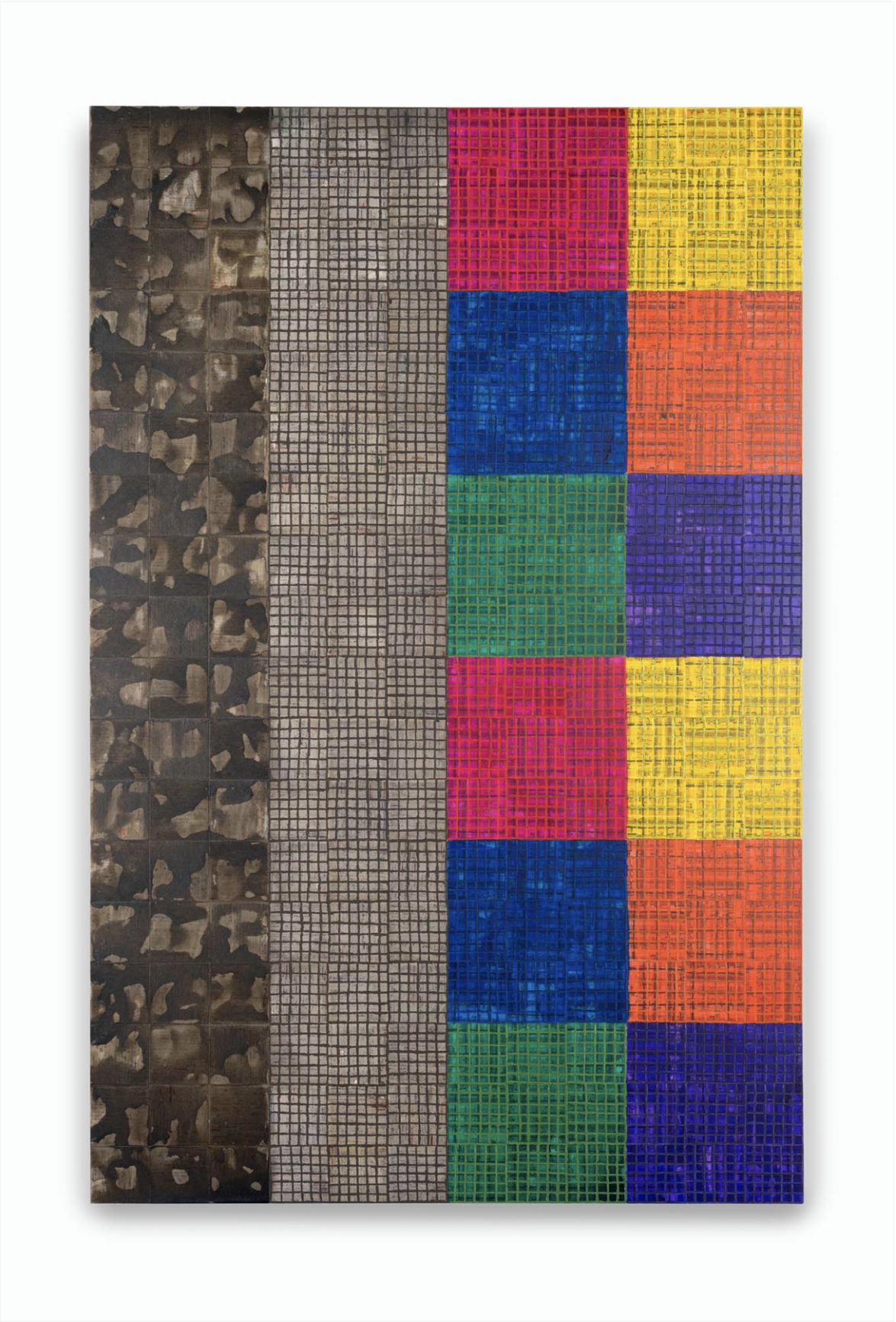
This piece is about what that something is, and about the two American art forms — bebop jazz and abstract painting — that were working on the same problem from different directions in the middle of the twentieth century and solved it, more or less, at the same time. It is also about McArthur Binion, who is one of the few artists alive today who talks about this connection explicitly and whose work makes it visible in a way that is almost forensic. When Binion says his practice begins "at the crossroads of bebop improvisation and Abstract Expressionism," he is not reaching for a poetic metaphor. He is describing his actual method.
New York, 1945–1955
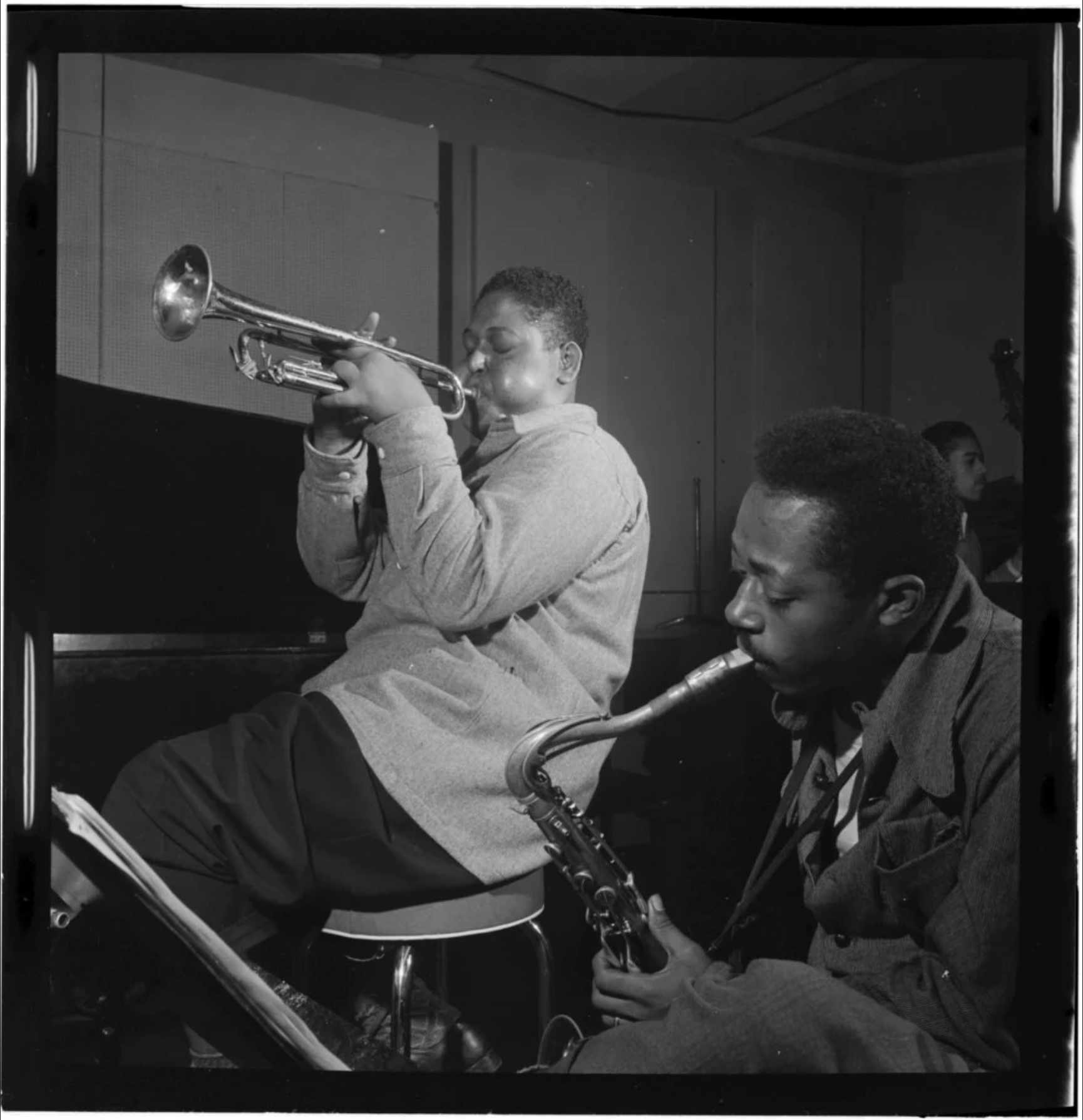
In 1945, bebop was arriving. Charlie Parker and Dizzy Gillespie were playing Minton's Playhouse in Harlem, working out a music that was faster, harmonically denser, more demanding than the swing that preceded it — a music that assumed a different kind of listening, one that didn't require you to follow a melody so much as to inhabit a texture, a rhythm, a temperature. It was not background music. It was not dance music in any conventional sense. It was music that demanded your full presence and rewarded it with an experience that couldn't be described as anything other than what it was.
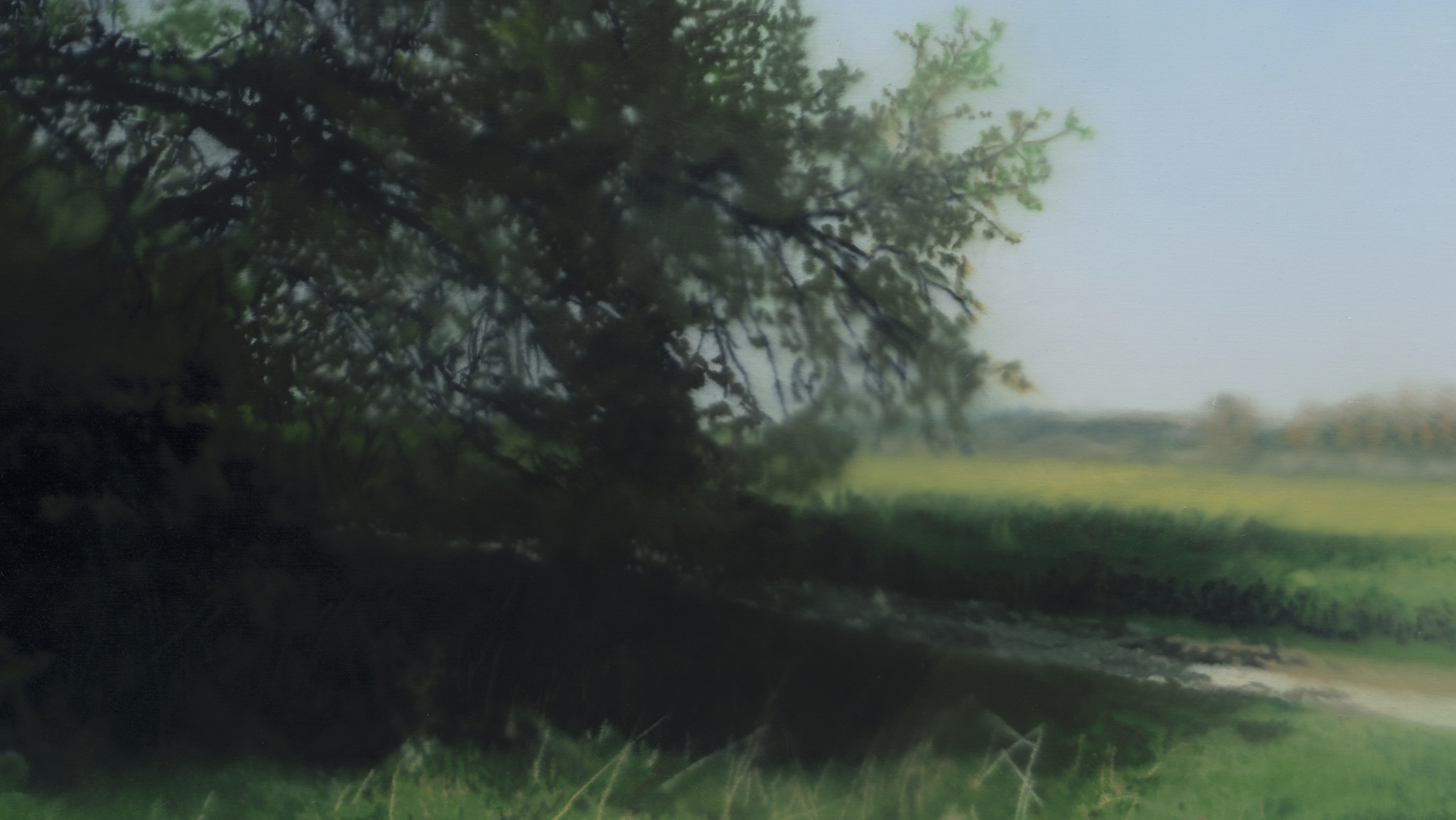
Across the same years, in studios and lofts downtown, the Abstract Expressionists were arriving at something that rhymed. Pollock, de Kooning, Rothko, Kline — they were making work that refused to give you a subject to hold onto, that replaced narrative with presence, that asked you to inhabit the painting rather than read it. The paintings were not about something. They were something. The relationship between the viewer and the work was not one of interpretation but of encounter, which is exactly the relationship bebop demanded between the listener and the music.
"Both forms arrived at the same discovery: that the most direct path to genuine feeling was to abandon the consolation of the familiar."
— Priya KapoorThere is substantial historical evidence that the communities overlapped — Pollock listening to bebop in his studio, jazz musicians spending evenings at gallery openings, the critic Clement Greenberg moving between both worlds. But the more interesting thing is not the direct influence. The more interesting thing is the convergence: two American art forms arriving independently at the same formal discovery, which is that the most direct path to genuine feeling runs through abstraction rather than representation. That the thing you are trying to communicate — whether it is grief or joy or the specific quality of consciousness in a particular moment — is more honestly transmitted by texture, rhythm, density, and color than by a story about it.
Improvisation and the Grid
This is where McArthur Binion becomes especially instructive, because his work makes the connection between the two forms structurally visible rather than just metaphorically evoked. Binion's DNA paintings are built on a grid — a formal structure as rigorous and predetermined as the chord changes of a bebop standard. But within that structure, the marks are improvisatory: applied with enormous physical pressure, varying in weight and rhythm across the surface, accumulating into something that is clearly organized but never mechanical. The grid is the form. The marks are the improvisation. The relationship between them is exactly the relationship between the chord changes and Charlie Parker's solo.
This is not a coincidence. Binion has been explicit about the influence. He grew up in Detroit in the 1950s, surrounded by a music culture that ran from Motown to the avant-garde, and he absorbed bebop as a structural language before he absorbed Abstract Expressionism as a visual one. When he arrived at Cranbrook in the early 1970s and began working with grids and repetitive marks, he was not simply translating the Minimalists — he was translating a way of being inside a structure that he had first learned from music. The autobiography buried underneath the grid in his DNA series — the phone books, the birth certificate, the passport — is the equivalent of the musician's personal history that shapes how they improvise over the changes. The structure is shared. The mark is individual. The painting is both at once.
The Long Conversation
The conversation between jazz and visual art did not end in the 1950s. It has continued in different registers through every decade since — in Jean-Michel Basquiat's notational surfaces, in Theaster Gates's use of jazz records as raw material, in the work of a dozen artists who have used musical structure as a model for visual form. What is remarkable about Binion's version of this conversation is its literalness and its longevity. He has been working on the same fundamental problem for fifty years, refining the question rather than changing the subject, and the question — how do you put a life inside a structure without the structure losing its discipline or the life losing its specificity — is the same question Coltrane was working on in 1960.
I listen to music when I look at paintings that have this quality. Not because I need it to decode them, but because it reminds me that the experience I am having has a grammar — that it is not random, that the feeling of being encountered by something rather than observing something is not mysticism, it is the result of specific formal choices made by a specific person working on a specific problem. The music and the painting are both saying: this is what it sounds like. This is what it looks like. This is what it feels like to be a particular human being alive in a particular moment, working as hard as possible to tell you something true.