The doodle is not an art form. This is the consensus, and it has been for as long as art forms have been ranked. The doodle is what you do when you're not paying attention — in the margins of a meeting agenda, on the back of an envelope, on any flat surface that's available when your hand needs to move and your mind is somewhere else. The doodle is the absence of intention. It cannot be serious. It cannot be the basis for a serious practice.
The Doodle as Practice
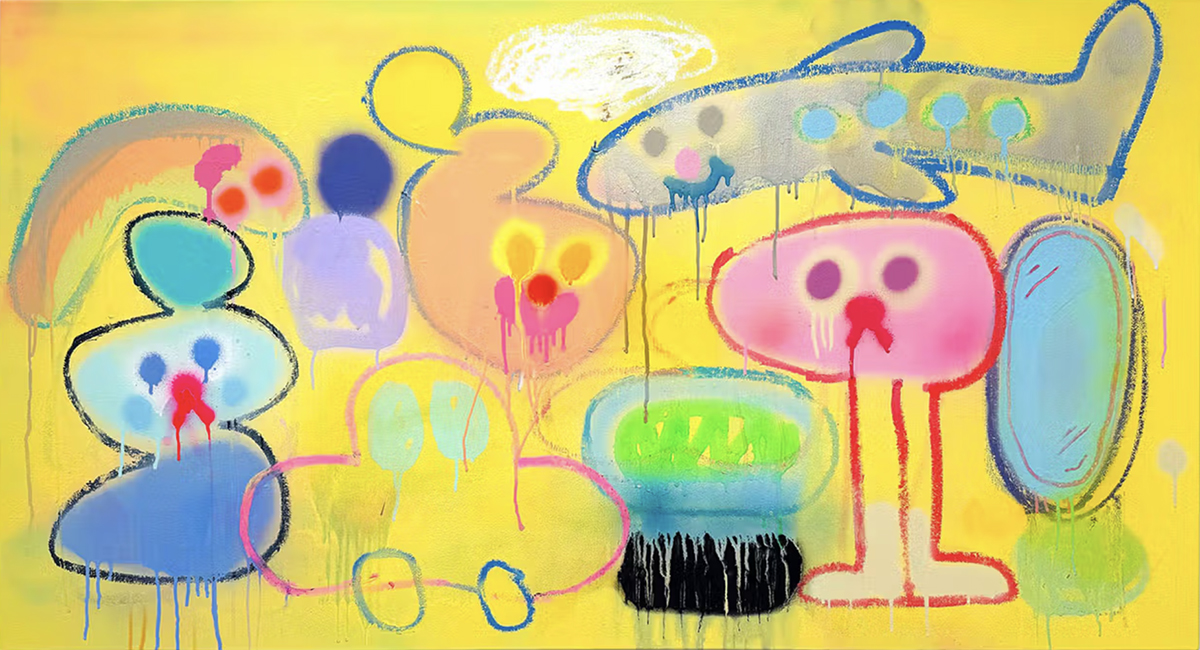
Jon Burgerman has spent his career making a different argument. For Burgerman, the doodle is not the absence of intention but the purest form of it — the mark-making that occurs before self-consciousness intervenes, before the artist's internal editor decides what the hand is allowed to produce. The characters that populate his work — bulbous, expressive, sometimes anxious, always alive — did not emerge from a design process. They emerged from the sustained practice of drawing without stopping, letting one mark suggest the next, following the logic of the line wherever it led.
This sounds like a romantic account of spontaneous creativity, but Burgerman's practice is more disciplined than the word "doodle" suggests. He has been making these marks for decades, developing and refining the visual language through repetition, understanding which forms hold energy and which collapse, learning to navigate the relationship between the characters and the space they inhabit. The work looks effortless because enormous effort has gone into understanding how effortlessness works. You don't get to the good doodle without thousands of bad ones behind you.
The characters themselves have the formal coherence of genuine creation: they are not generic cartoon figures but specific beings with specific visual identities, recognizable across contexts and scales. They carry the kind of emotional legibility that character designers aim for and rarely achieve — a viewer who has never encountered Burgerman's work before can immediately read the affective state of a given figure, understand its relationship to the figures around it, feel the social dynamics of the room. This is a significant formal achievement, and it is not accidental.
"People think joy is easy. It isn't. Anxiety is easy. Irony is easy. Joy takes real commitment because you have to mean it, and meaning something is the hardest part."
— Jon BurgermanBuilding the World One Wall at a Time
The murals — painted on walls in cities across Asia, Europe, North and South America, Australia — came before the international mural movement had coalesced into the institutional form it now takes, before festivals and commissions had established a defined career path for artists working at building scale. Burgerman was doing it through the more rudimentary mechanism of simply showing up in cities and finding surfaces, building relationships with communities and businesses that were willing to let him paint their walls, and understanding that the public dimension of the work was not incidental to it but essential.
A mural is not simply a painting at building scale. It exists in a specific relationship with specific people in a specific place, and those relationships change what it means. The characters Burgerman paints on a wall in Tokyo are in conversation with the visual culture of that street, that neighborhood, that city in a way that a gallery painting cannot be. They are seen by people who didn't choose to look at art, who encounter them on their way to work or school or shopping, and they make a claim on the attention of those people without the mediating framework of the white cube. The work has to earn its audience in real time, in real space, against everything else competing for that attention.
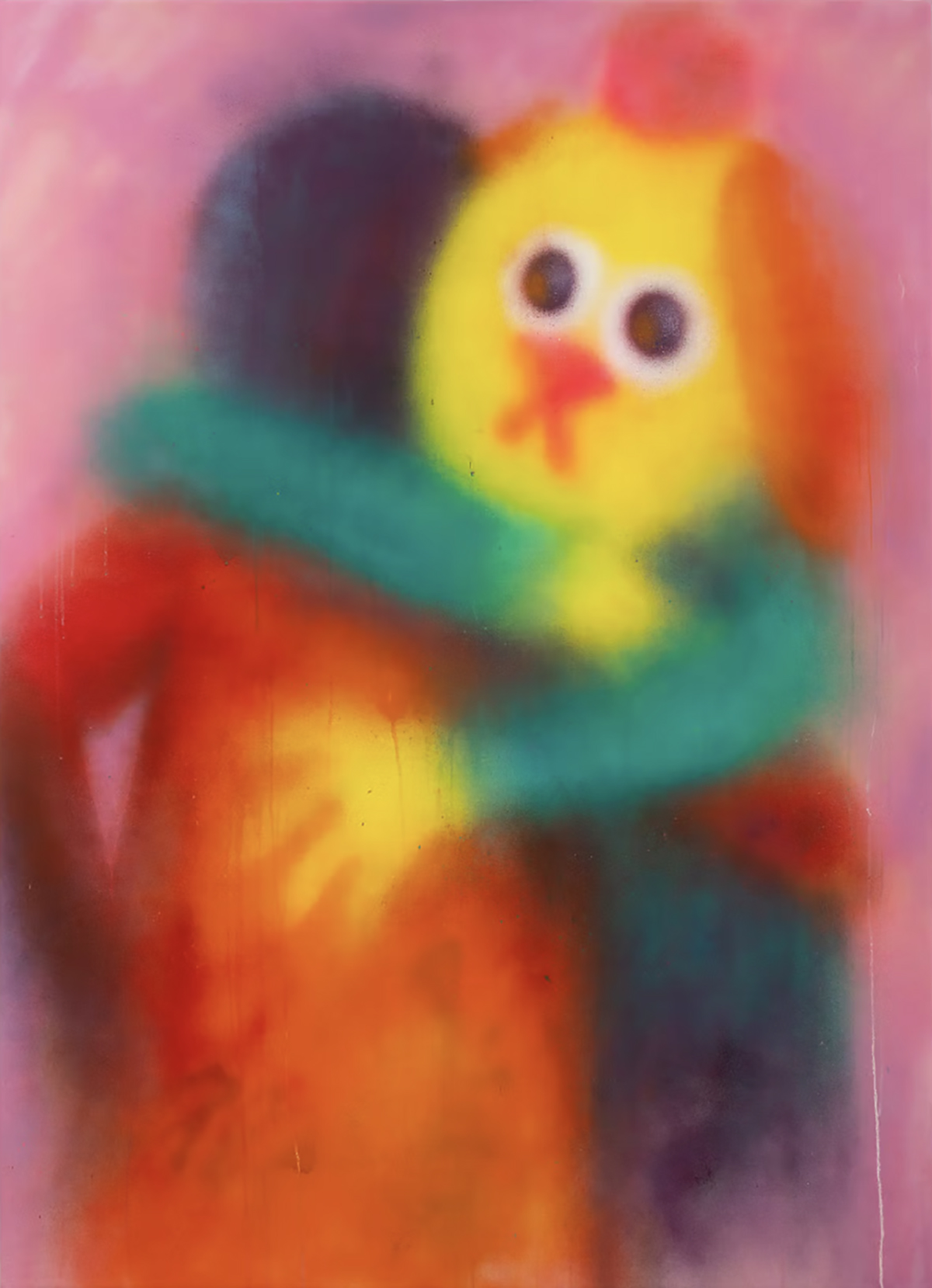
Jon Burgerman, Hold On, It Won't Last Long, 2026.
Why Joy Is Serious
The contemporary art world has a complicated relationship with joy. Sincerity in general is suspect — it risks sentimentality, naivety, the failure of ironic distance that sophisticated viewers require. Joy in particular is associated with commercial culture, with greeting cards and entertainment, with the pleasure that arrives pre-processed and requires nothing from its audience. Serious art, in this framework, disturbs; it challenges; it makes demands. Joy is what you feel when art is not making demands.
Burgerman's work refuses this framework not by arguing against it but by demonstrating its limits. The joy in his paintings is not comfortable or uncritical — it coexists with something more complicated, a visual register that includes anxiety, uncertainty, the peculiar loneliness of figures who are always in the middle of a crowd. The title of the 2026 work in this issue — Hold On, It Won't Last Long — is not a joyful title. It is a title about endurance, about the difficulty of remaining present through experiences that are hard. The joy in the painting is not ignorance of difficulty. It is a response to it.
This is what makes Burgerman's aesthetic position more serious than it first appears. Joy, in his practice, is not the absence of darkness but its antidote — a deliberate choice to make work that gives something rather than withholds, that reaches toward the viewer rather than retreating from them, that insists on the possibility of pleasure even when pleasure is not easy. This is a harder position to maintain than irony, because it has no safety net. When you commit to joy, you have to mean it. The paintings mean it.