The large painting is a statement about time before it is anything else. A work that measures over nine feet high requires months of sustained attention from the painter — not continuous attention, which is impossible, but the kind of repeated return that constitutes a long conversation with a single surface. Every time you come back to a large painting in progress, it has changed overnight, the paint having shifted slightly, dried to a slightly different value, revealed decisions that seemed correct at the time and are now revealed as wrong. You look at what you made, you live with it, you decide whether to proceed or correct. The large painting is the record of all those decisions and all those returns.
The Long Study
Nigel Howlett's relationship to the figurative tradition is one of deep technical engagement rather than nostalgia. He has spent decades with the old masters — not in the academic sense of copying their works as a training exercise, but in the sense of sustained visual analysis: understanding how Velázquez organized the space around a figure, how Rembrandt understood the relationship between light and shadow as a language rather than a technique, how Chardin made the surface of an ordinary object vibrate with presence. This is not the study of style but the study of problems: how does a painter solve the problem of depicting a human being in space in a way that makes that being feel inhabited?
The problem is harder than it sounds, because representation is not the issue. A photograph represents a human being in space with no particular difficulty. What painting can do that photography cannot is give the figure a quality of weight and interiority — a sense that there is something going on behind the face, that the body occupies the space with intention rather than simply filling it. This quality is what the old masters pursued and occasionally achieved, and it is what Howlett is pursuing when he spends months on a single figure on a large linen.
His training — sustained looking, drawing, the kind of patient technical practice that contemporary art education has largely abandoned — gives him access to formal resources that most painters working today cannot draw on. The understanding of how to model form with light, how to organize a complex figure composition so that the eye moves through it in a controlled sequence, how to make the surface of paint carry information about weight and texture simultaneously: these are skills that require years to develop and are almost impossible to acquire without deliberate and sustained study.
"The painting doesn't know it's going to be finished. It knows when something is right, and it waits for me to catch up."
— Nigel HowlettWhat Large Scale Demands
The scale of Howlett's recent work — Pursuit of Truth at 109.3 × 74.8 inches, Return at 36.6 × 32.1 inches — creates two distinct registers within the practice. The large works demand a kind of total commitment that small works can tolerate being without: you cannot make a large painting in a tentative or exploratory mode, because the amount of work required means that every decision carries consequences through all the layers of the work that follow it. A false start on a large painting is genuinely costly, not just technically but psychologically. The large painting is not for people who are still working out what they think.
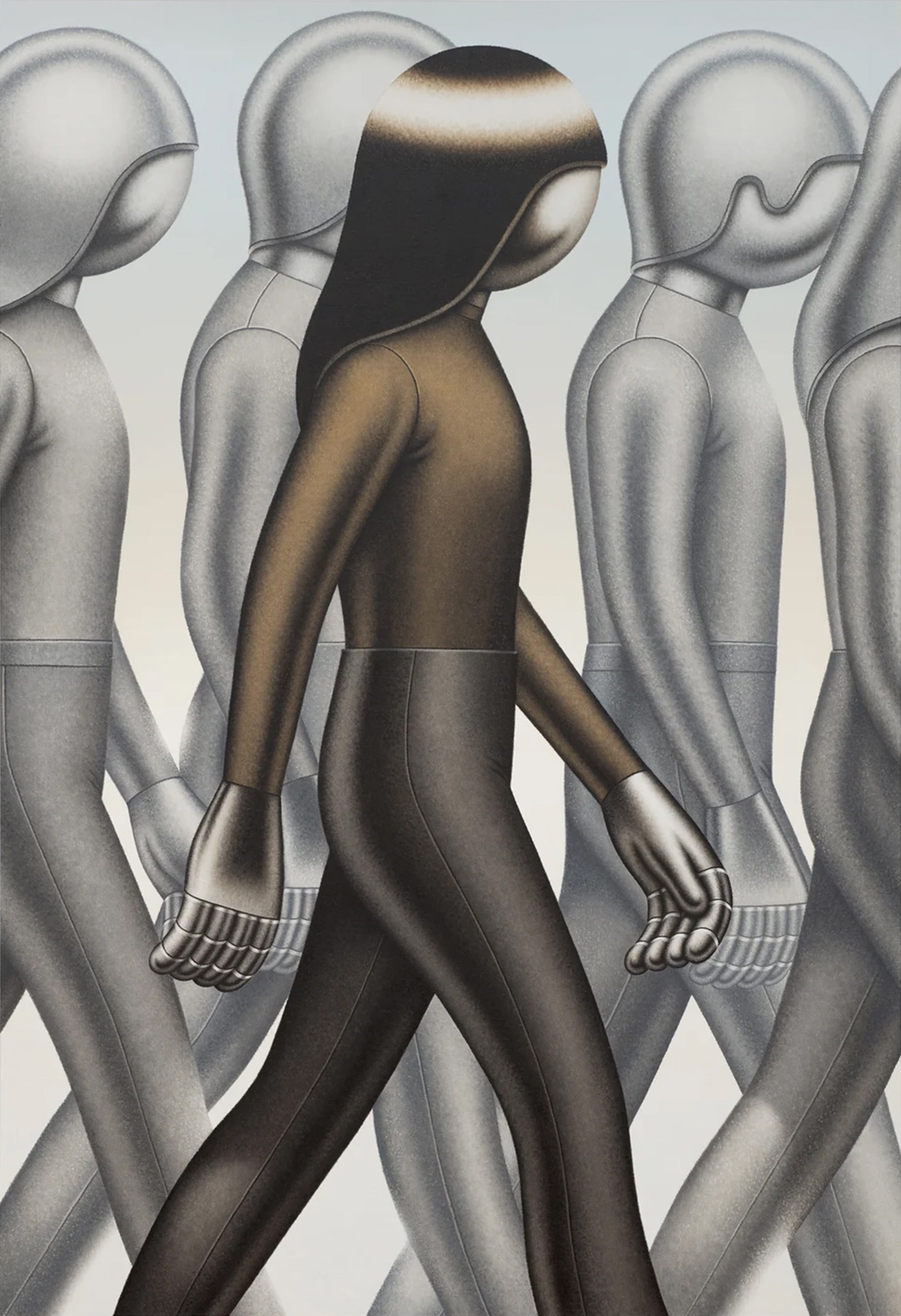
The smaller works — and Return at three feet by two and a half feet is small by the standards of the practice — have a different quality: more intimate, more concentrated, the spatial organization more compressed. What the large format gives to the viewer — the sense of being physically present with the figure, of the painting filling your peripheral vision the way a person might if you were in the same room — the smaller format replaces with a different kind of presence, the sense of something contained and fully resolved within its limits.
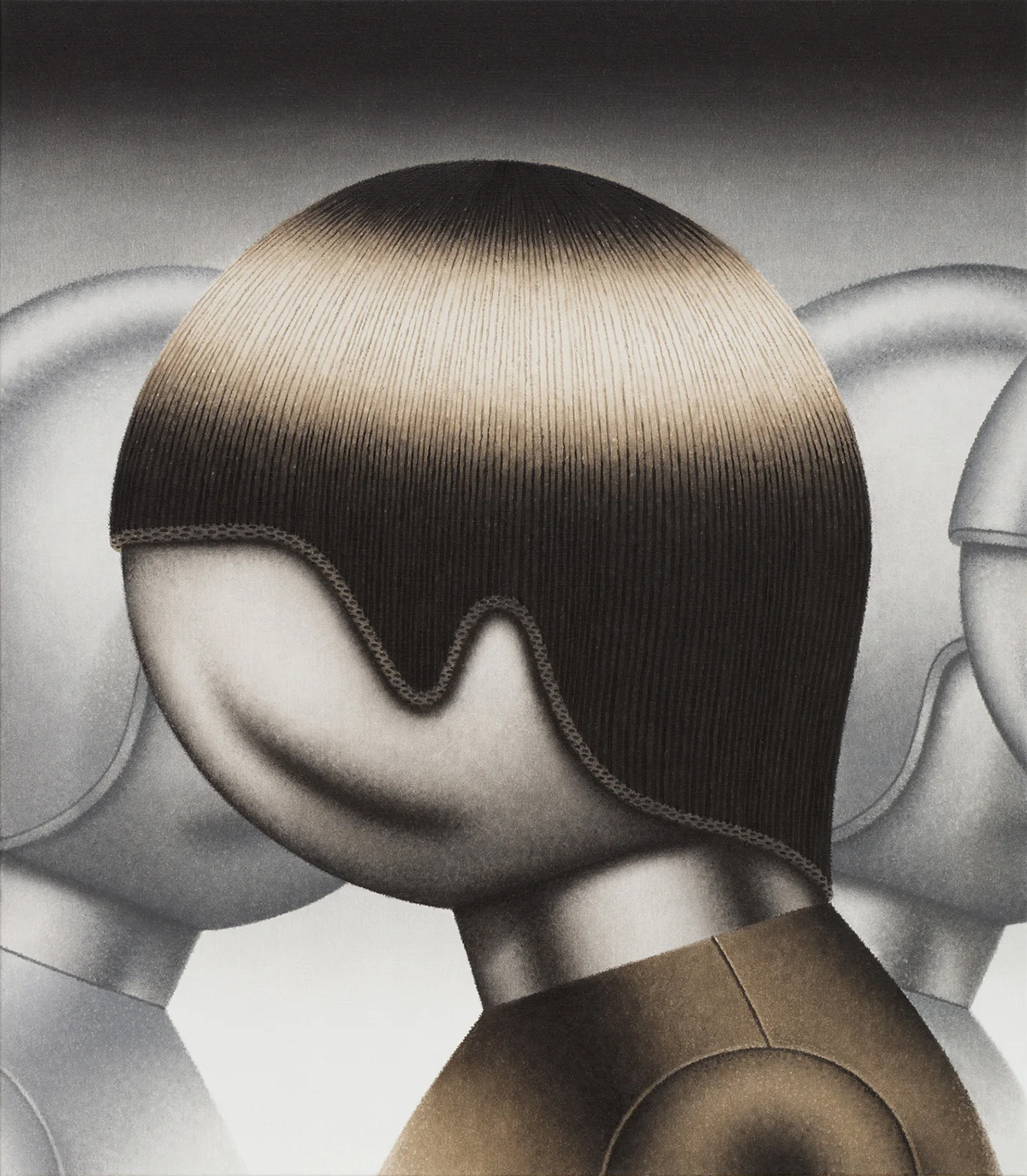
Nigel Howlett, Return, 2026. Oil on linen. 36.6 × 32.1 in. (93 × 81.5 cm).
The Figure and the Silence
What is distinctive about Howlett's figures is not their technical accuracy but their quality of stillness. The people in his paintings are not performing for the viewer. They are not arranged to demonstrate their psychological state or to communicate some intended meaning. They are simply present in space, in the specific quality of light that Howlett gives them — a light that is warm but not dramatic, that describes form without making a spectacle of it, that allows the surface of the body and the space around it to exist in the same temporal register.
This stillness is technically difficult to achieve because representation always tends toward narrative — the viewer's eye searches the painted face for expression, the body for gesture, the scene for event. Howlett works against this tendency without eliminating it: the figures have faces that carry emotional information, but the information is ambiguous, resisting the single-reading that narrative painting invites. You don't know what the person is thinking. You know that they are present, that they are in this light, in this moment, and that the painter has looked at them for a very long time.
The paintings are large and slow and extremely sure of themselves, as the deck of this piece says. That sureness is not arrogance — it is the quality that comes from having spent forty years asking the same question and getting closer, each time, to an answer that the painting knows before the painter does. The silence in these works is not emptiness. It is the space that patience makes.